
Understanding Your Options
When hip arthritis becomes severe, surgery may be the best option to restore mobility and eliminate pain. Two main surgical options exist: total hip replacement and hip resurfacing.
Total Hip Replacement (THR)
What Is It?
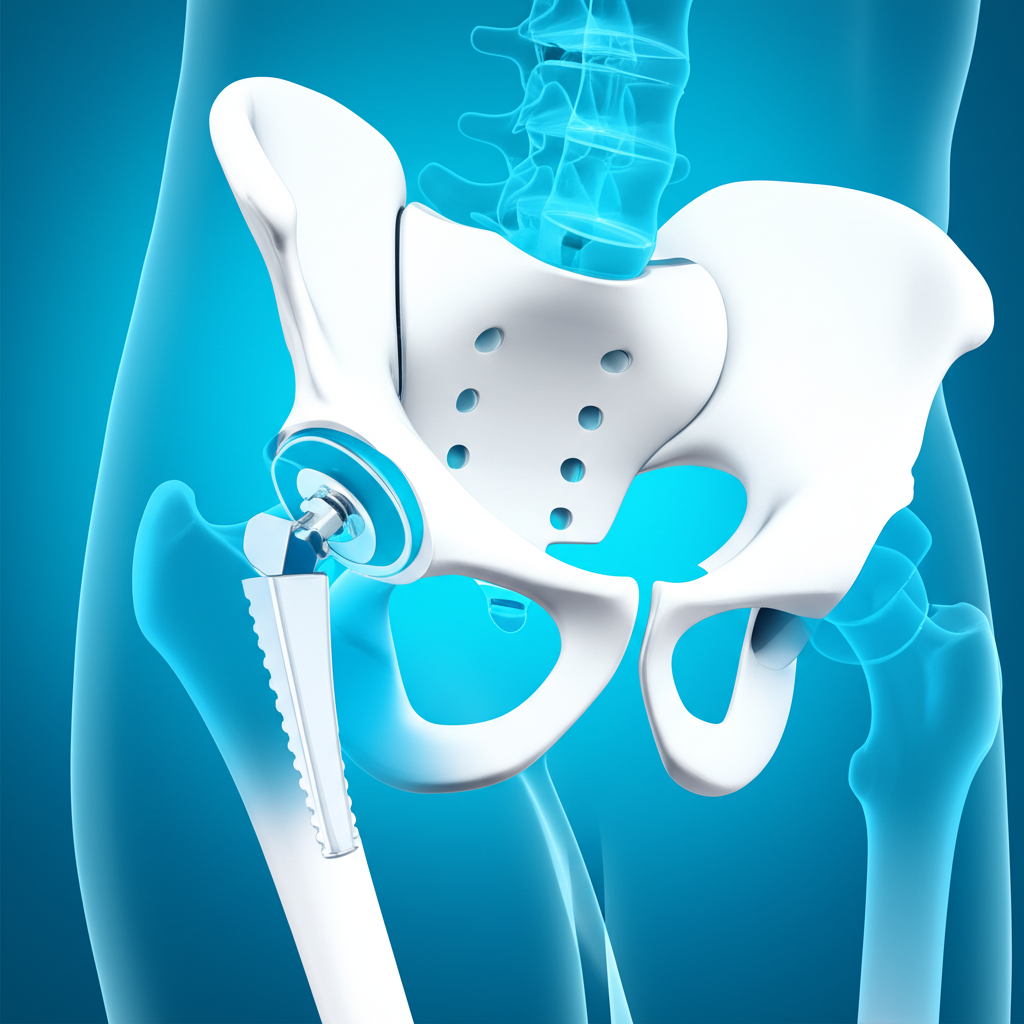
Total hip replacement involves removing the damaged femoral head (ball) and replacing it with a metal or ceramic ball on a stem that fits into the femur. The damaged socket (acetabulum) is also replaced with a metal cup lined with plastic, ceramic, or metal.
Advantages
- Proven track record — Millions performed worldwide
- Excellent pain relief — Over 95% satisfaction rate
- Durable — Modern implants last 20-25+ years
- Suitable for most patients — Including elderly and those with bone loss
Disadvantages
- More bone is removed
- Potential leg length discrepancy
- Dislocation risk (1-2%)
- May need revision surgery eventually
Hip Resurfacing
What Is It?
Hip resurfacing is a bone-conserving alternative. Instead of removing the femoral head, the surgeon reshapes it and caps it with a metal covering. The socket receives a metal cup similar to THR.
Advantages
- Preserves bone — Less femur is removed
- More natural feel — Closer to normal hip anatomy
- Lower dislocation risk — Larger ball size
- Easier revision — If needed later, can convert to THR
Disadvantages
- Limited candidates — Not suitable for everyone
- Metal-on-metal concerns — Some designs had high failure rates
- Femoral neck fracture risk — Higher than THR
- Requires experienced surgeon — Technique-dependent outcomes
Who Is a Good Candidate?
Best Candidates for Hip Resurfacing
- Younger patients (under 65)
- Male patients (better outcomes than females)
- Active individuals wanting to return to high-demand activities
- Good bone quality in femoral head and neck
- Larger anatomy (bigger femoral head size)
Better Suited for Total Hip Replacement
- Older patients (over 65)
- Female patients
- Patients with osteoporosis
- Those with femoral head cysts or deformity
- Patients with inflammatory arthritis
Comparison Table
| Factor | Hip Replacement | Hip Resurfacing |
|---|---|---|
| Bone removal | More | Less |
| Dislocation risk | 1-2% | <1% |
| Best age | Any | Under 65 |
| Activity level | Moderate | High |
| Longevity | 20-25 years | 15-20 years |
| Revision ease | Standard | Easier |
Recovery Comparison
Hip Replacement Recovery
- Hospital stay: 2-3 days
- Walking aids: 4-6 weeks
- Driving: 4-6 weeks
- Return to work: 6-12 weeks
- Full recovery: 3-6 months
Hip Resurfacing Recovery
- Hospital stay: 2-3 days
- Walking aids: 2-4 weeks
- Driving: 3-4 weeks
- Return to work: 4-8 weeks
- Full recovery: 3-6 months
Making Your Decision
Questions to Discuss with Your Surgeon
- Am I a good candidate for resurfacing based on my anatomy?
- What is your experience with both procedures?
- What are the specific risks for me?
- What activities can I return to after each option?
- What happens if I need revision surgery?
Conclusion
Both procedures can provide excellent pain relief and improved function. The best choice depends on your age, activity level, bone quality, and personal goals. Discuss both options thoroughly with your orthopaedic surgeon to make an informed decision.