
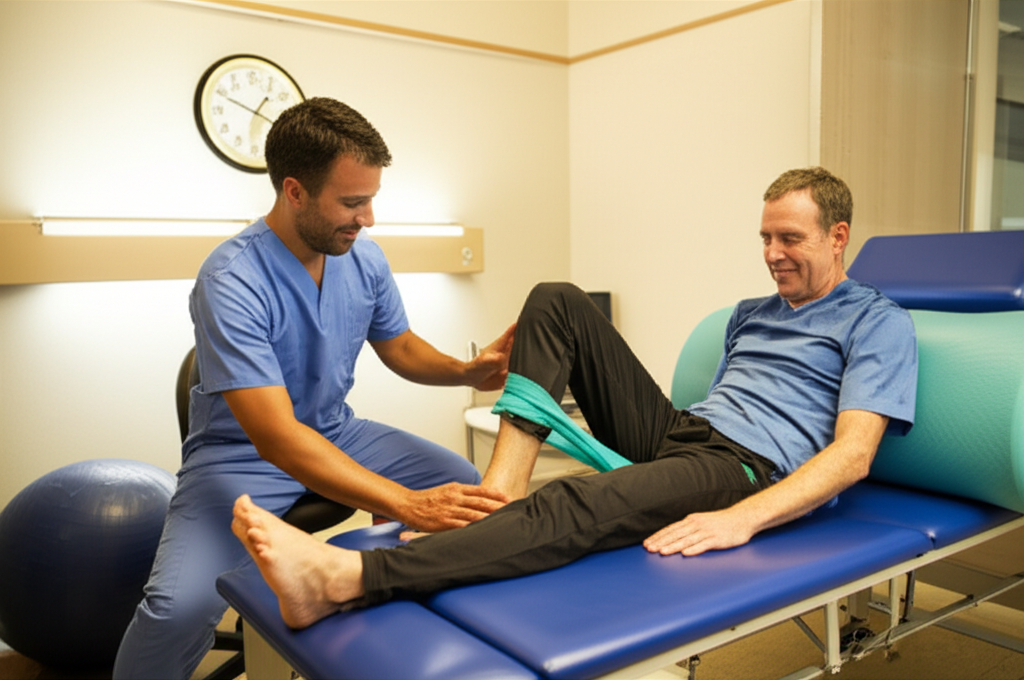
The First Week After Surgery
The first week post-surgery is critical for your recovery. You'll likely spend 2-3 days in the hospital before being discharged.
Hospital Stay (Days 1-3)
Day 1:
- Surgery recovery and pain management
- Physical therapist will help you sit up and possibly stand
- Ice and elevation to manage swelling
Days 2-3:
- Begin walking with a walker or crutches
- Practice basic exercises (ankle pumps, quad sets)
- Learn to navigate stairs if needed for discharge
At Home (Days 4-7)
- Continue prescribed exercises 3-4 times daily
- Use ice for 20 minutes every 2-3 hours
- Keep leg elevated when sitting
- Take pain medication as prescribed
Weeks 2-4: Building Strength
This phase focuses on regaining mobility and building basic strength.
Goals for This Phase
- Increase knee bend (flexion) to 90 degrees
- Walk independently with a cane
- Reduce reliance on pain medication
- Perform daily activities with minimal assistance
Exercises
- Heel slides
- Straight leg raises
- Seated knee extensions
- Standing knee bends
Weeks 4-8: Increasing Independence
By week 4, most patients can:
- Walk without assistive devices indoors
- Drive (if left knee and automatic car, usually 4 weeks; right knee usually 6 weeks)
- Return to desk work
- Perform light household tasks
Milestones
| Week | Expected Progress |
|---|---|
| 4 | Walk independently indoors |
| 6 | Drive (left knee) |
| 8 | Return to light work |
| 12 | Most normal activities |
Months 3-6: Return to Normal
What to Expect
- Knee continues to heal internally
- Swelling gradually decreases
- Strength improves significantly
- Most patients feel "back to normal"
Activities You Can Resume
- Swimming and water exercises
- Golf (with doctor approval)
- Light hiking
- Cycling (stationary or outdoor)
Long-Term Outlook
6-12 Months
- Final healing phase
- Maximum improvement typically reached
- Some patients may still notice occasional stiffness
Tips for Long-Term Success
- Stay active — Regular low-impact exercise protects your new joint
- Maintain healthy weight — Less stress on the replacement
- Avoid high-impact activities — Running, jumping, contact sports
- Annual check-ups — Monitor your implant's condition
When to Contact Your Doctor
Seek immediate medical attention if you experience:
- Fever over 38°C
- Increasing redness or warmth around incision
- Sudden increase in pain or swelling
- Difficulty breathing or chest pain
- Calf pain or swelling (possible blood clot)
Conclusion
Recovery from knee replacement takes time and dedication, but most patients achieve excellent results. Follow your physiotherapy program diligently, and don't hesitate to ask your surgeon or therapist questions along the way.