
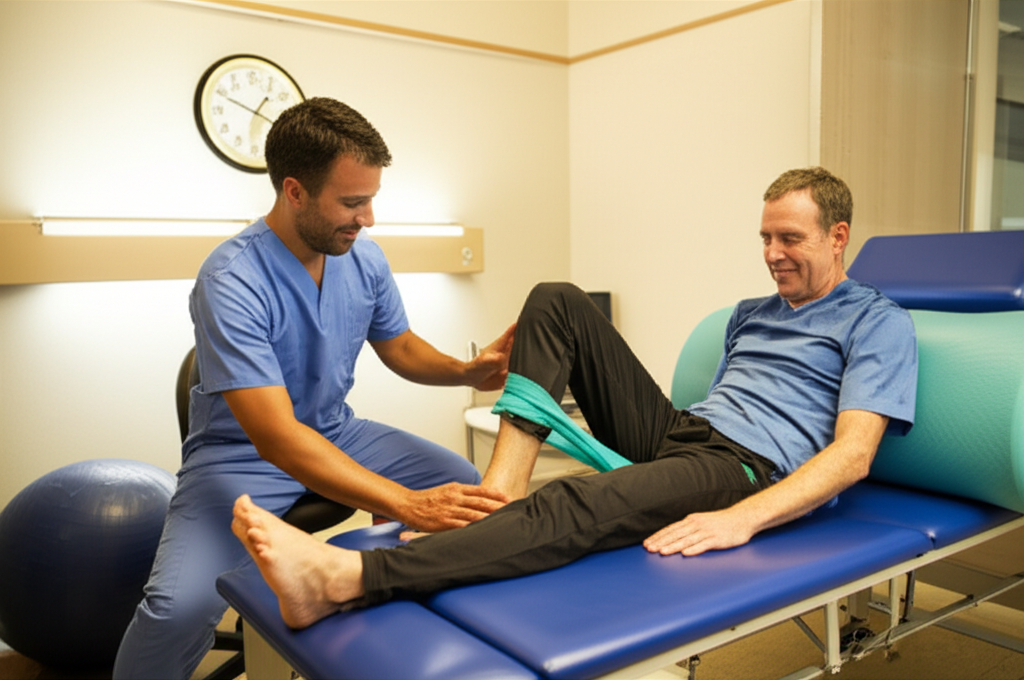
Let's Be Real About That First Week
Your surgeon just told you that you need a knee replacement. Maybe you've been putting it off. Maybe you just scheduled the surgery. Either way, you're probably wondering: what's recovery really like?
Let's be honest: the first week after knee replacement surgery is going to be tough. Not "I stubbed my toe" tough — more like "why did I agree to this" tough. But here's the thing: thousands of people get through it every week, and so will you.
Days 1-3: Your Hospital Stay
Day 1 is a blur. You'll wake up groggy, uncomfortable, and wondering if the physiotherapist who's asking you to stand up is absolutely insane. (Spoiler: they're not, and yes, you really do need to try walking on Day 1.)
Here's what's actually happening those first 72 hours:
Day 1 — You're focused on pain management and just getting through it. Ice and elevation become your best friends. At some point, a cheerful physio will appear and ask you to sit up. Then stand. Then maybe take a step. It'll feel impossible. Do it anyway.
Days 2-3 — This is when reality sets in. The anesthesia has worn off. Your knee hurts. But you'll also start to realize you can actually do this. You'll walk a few steps with a walker. You'll practice ankle pumps and quad sets (exciting, right?). If you have stairs at home, they'll make sure you can climb them before discharge.
The pain isn't unbearable — they'll manage it well — but it's present. Constant. A dull, aching reminder that you just had major surgery.
Days 4-7: Welcome Home (Now What?)
Coming home feels amazing. Your own bed! Your own bathroom! Then you realize: wow, your house has a lot of stairs and tight corners you never noticed before.
This week is about routine. Ice your knee every 2-3 hours (yes, really). Keep it elevated when you're sitting. Do your prescribed exercises 3-4 times a day even though they're boring and uncomfortable. Take your pain medication before the pain gets bad, not after.
Your job this week? Don't be a hero. Rest. Recover. Let people help you. Binge that show you've been meaning to watch.
Weeks 2-4: The Turning Point
Around week 2, something shifts. You wake up one morning and realize the pain is... less. Not gone. But manageable. You start to believe this might actually work.
Your goals for this phase:
- Bend your knee to 90 degrees (it sounds simple; it's not easy)
- Walk with just a cane instead of a walker
- Start reducing pain meds (under your doctor's guidance)
- Do basic daily tasks without wanting to cry
The Exercises Nobody Warns You About
Heel slides. Straight leg raises. Seated knee extensions. They sound gentle. They're not. Each one will test your patience and make you question your life choices.
But here's what I wish someone had told me: these boring, uncomfortable exercises are literally rebuilding your strength. Skip them, and you'll pay for it later. Do them consistently, and you'll be shocked at how much better you feel each week.
Think of it this way: you wouldn't expect to run a marathon without training. You can't expect to recover from major surgery without putting in the work.
Weeks 4-8: Hello, Independence
By week 4, you're going to feel almost human again. Not 100% — let's not get crazy — but functional. Most people hit these milestones somewhere in this phase:
Week 4-ish: Walking indoors without a cane. It feels like winning the lottery.
Week 6-ish: Driving again (if it's your left knee and you have an automatic car - usually week 4; right knee takes longer, usually 6 weeks). The freedom is intoxicating.
Week 8-ish: Back to desk work, light household tasks, feeling almost normal.
| Week | What You Can Probably Do |
|---|---|
| 4 | Walk around your house like a normal person |
| 6 | Short car trips, light errands |
| 8 | Work from home, cook dinner |
| 12 | Most of your normal activities (with some caution) |
Everyone's different, obviously. Some people bounce back faster. Others need more time. Don't compare your week 6 to someone else's — focus on being better than your own week 5.
Months 3-6: The "Wait, I Almost Forgot I Had Surgery" Phase
Here's what nobody tells you: your knee keeps healing for months after surgery. That slight swelling? Normal. The occasional stiffness when you've been sitting too long? Totally normal. The weird sensation that doesn't quite feel like your old knee? Also normal.
By month 3, most people feel pretty close to their new normal. You can:
- Swim (amazing for building strength without impact)
- Play golf (check with your surgeon first)
- Do light hiking (finally!)
- Cycle (both stationary and outdoor)
What you can't do yet: run, jump, or pretend you're 25. High-impact stuff is off the table. Probably forever. But honestly? After months of pain before surgery, most people don't care. They're just thrilled to walk without limping.
The Emotional Rollercoaster Nobody Mentions
Some days you'll feel unstoppable. Other days you'll wonder if you'll ever feel normal again. This is completely normal. Recovery isn't linear. You'll have good days and frustrating days. The trend is what matters, not the individual data points.
The Long Game: 6-12 Months and Beyond
Maximum improvement typically happens around the one-year mark. But here's the good news: most people feel "back to normal" much earlier, around 6 months.
Your new knee can last 20-25 years if you:
- Stay active — Regular walking, swimming, cycling keeps the joint healthy
- Maintain a healthy weight — Every extra kilogram is 4kg of pressure on your knee
- Avoid high-impact activities — Sorry, marathon running is probably out
- Show up for annual check-ups — Boring but important
Think of your new knee like a good pair of running shoes. Treat it well, and it'll serve you for decades. Abuse it, and you'll need a revision surgery sooner than you'd like.
When to Actually Worry
Most issues after knee replacement are normal healing stuff. But call your doctor immediately if you have:
- Fever over 38°C (could be infection)
- Increasing redness or warmth around the incision
- Sudden spike in pain or swelling
- Difficulty breathing or chest pain
- Calf pain or swelling (possible blood clot — don't mess around with this)
The Bottom Line
Knee replacement recovery is a marathon, not a sprint. It takes time. It takes work. There will be days you question whether it was worth it.
But here's what I've seen again and again: at the 6-month mark, almost everyone says it was absolutely worth it. The ability to walk without pain, sleep through the night, play with grandkids — that's priceless.
Your job is simple: follow your physiotherapy program, be patient with yourself, and trust the process. You've got this.