
The Diagnosis That Changes Everything
You just got the MRI results. Rotator cuff tear. Your first thought: "I'm going to need surgery, aren't I?"
Maybe. But also maybe not.
Here's what most people don't realize: not all rotator cuff tears need surgery. In fact, many people do just fine with physiotherapy alone. The trick is figuring out which category you fall into.
Let's break it down.
First: What Even Is a Rotator Cuff?
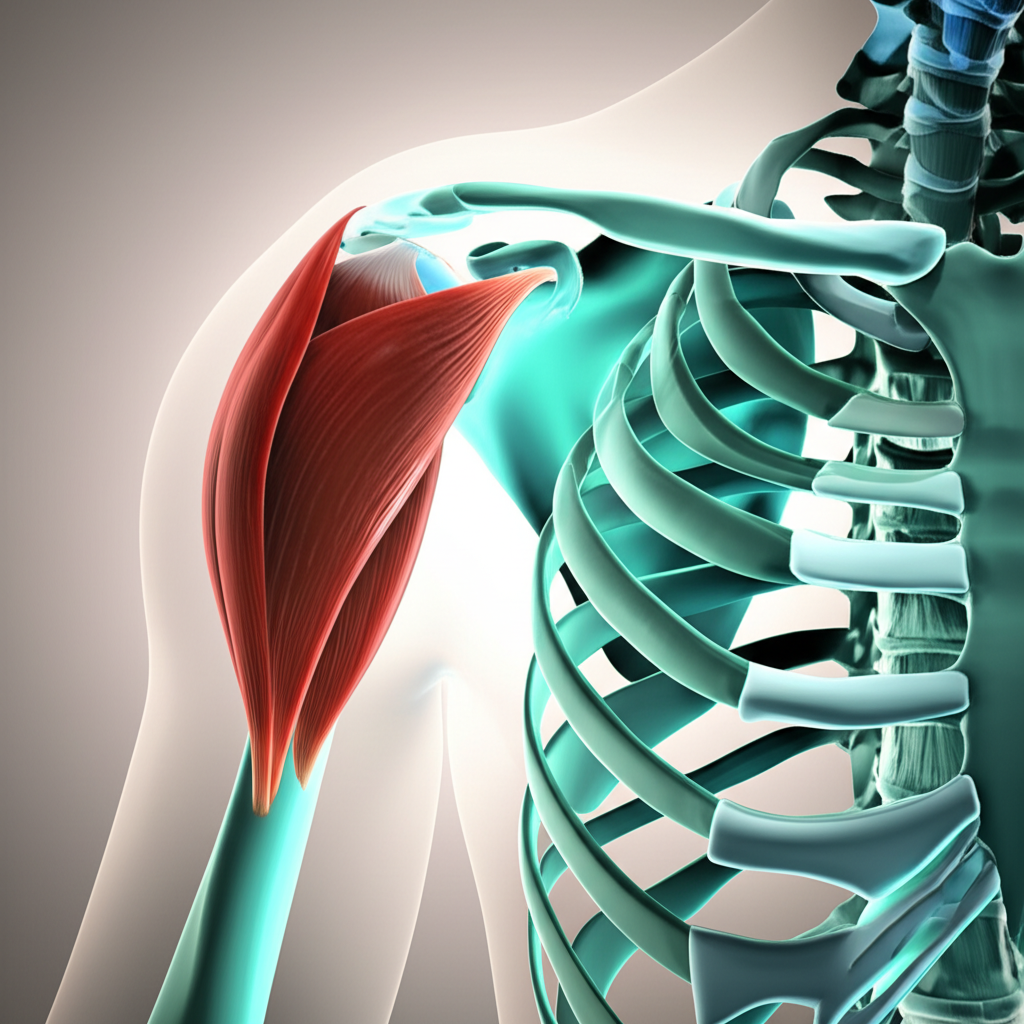
Your rotator cuff is a group of four muscles and tendons that wrap around your shoulder joint like a protective sleeve. They stabilize your shoulder and let you move your arm in all those weird directions shoulders can move.
The four muscles are:
- Supraspinatus (this one tears most often)
- Infraspinatus
- Teres minor
- Subscapularis
When one or more of these tears, your shoulder gets angry. Pain, weakness, limited movement — the whole package.
Not All Tears Are Created Equal
Partial Tears
Think of this like a carpet that's fraying but not ripped all the way through. Only part of the tendon is damaged. The rest is still doing its job.
The good news: These often heal with conservative treatment. The bad news: They can progress to full tears if you don't take care of them.
Full-Thickness Tears
This is the carpet ripped completely through. The entire tendon is torn.
But here's where it gets interesting: even full-thickness tears don't always need surgery. Size matters. A lot.
- Small (less than 1cm): Often do well without surgery
- Medium (1-3cm): Depends on age, activity, symptoms
- Large (3-5cm): Usually need surgical repair
- Massive (more than 5cm): Complicated; sometimes too big to repair
What a Rotator Cuff Tear Actually Feels Like
Pain. Lots of pain. Especially:
- At rest (yes, it hurts even when you're not moving)
- At night (try sleeping on that shoulder — actually, don't)
- When lifting or lowering your arm
- When reaching behind your back or overhead
Weakness. You try to lift your arm and... it just doesn't want to cooperate. Not "I'm out of shape" weakness. More like "my shoulder is actively refusing to function" weakness.
A crackling sensation when you move your shoulder. Like bubble wrap popping, but inside your body. Delightful.
Limited range of motion. Tasks that used to be automatic — reaching for something on a shelf, putting on a jacket — become awkward struggles.
When Surgery Probably ISN'T Needed
Let's talk about who does well without surgery.
You're a Good Candidate for Conservative Treatment If:
You have a partial tear and the pain is manageable. Many partial tears never progress to full tears, especially if you're proactive about physiotherapy.
You have a small full-thickness tear and you're not particularly active. If you're 70, retired, and mostly want to be able to dress yourself and do light gardening, you probably don't need surgery.
You're older with lower activity demands. Age matters here. If you're over 60 and not training for a marathon, conservative treatment often works just fine.
You have a chronic tear where the muscle has already atrophied. Sad but true: if the muscle has wasted away from disuse, surgery might not help much anyway.
You respond well to physiotherapy. If 6-8 weeks of proper physio gets you 70-80% better, why go under the knife?
What "Conservative Treatment" Actually Means
Physiotherapy is the foundation. Not just random shoulder stretches. Proper, targeted strengthening and mobility work with a qualified physio who knows rotator cuff injuries.
Rest and activity modification. Stop doing the things that make it worse. Revolutionary, I know.
Anti-inflammatory medications (NSAIDs) to manage pain and reduce inflammation.
Steroid injections for temporary relief. They don't heal the tear, but they can calm things down enough for physiotherapy to work.
PRP (platelet-rich plasma) injections. The evidence is mixed, but some people swear by them for promoting healing.
The Success Rate (Because You're Wondering)
50-80% of patients improve significantly with conservative treatment. That's not a coin flip — those are decent odds.
The catch: You need to commit to 3-6 months of dedicated physiotherapy. Not "I'll do the exercises when I remember." Actual, consistent effort.
When Surgery Is Probably the Right Call
Okay, so when do you need surgery?
Strong Indications for Surgery:
You tore it in an acute injury and you're active. Young, active person tears their rotator cuff in a sports injury or accident? Surgery usually makes sense. You want that shoulder back to full function.
The tear is large or massive. Big tears don't heal on their own. They actually get bigger over time. Delaying surgery often makes the eventual surgery more complicated.
Conservative treatment failed. You did 3-6 months of proper physiotherapy. You tried injections. Nothing helped. Time to consider surgery.
You have significant weakness affecting daily activities. Can't lift a coffee mug? Can't wash your hair? That's impacting quality of life significantly.
You're young with high demands. Athletes, manual laborers, anyone who needs their shoulder to perform at a high level — surgery often gives better long-term results.
The tear is getting bigger on repeat imaging. Progressive tearing is a sign that surgery is needed before it becomes irreparable.
Your Surgical Options
If you do need surgery, here's what that looks like:
| Procedure | What It Is | Recovery Time |
|---|---|---|
| Arthroscopic repair | Minimally invasive, small incisions, tiny camera | 4-6 months |
| Mini-open repair | Small incision for direct visualization | 4-6 months |
| Open repair | Larger incision for complex tears | 6-9 months |
| Tendon transfer | For irreparable tears, use nearby tendon | 6-12 months |
| Reverse shoulder replacement | For severe arthritis + massive tear | 3-6 months |
Most rotator cuff repairs today are arthroscopic. Smaller scars, less pain, similar results to open surgery.
What Actually Affects Your Results
Surgery is only half the battle. Here's what determines whether you'll have a good outcome:
You'll Likely Do Well If:
- Your tear is smaller
- The tear is recent (less than 3 months old)
- Your tissue quality is good (no degeneration)
- You're younger
- You don't smoke
- You actually do your rehabilitation exercises
Outcomes Might Be Poorer If:
- You have a massive, chronic tear
- Your muscle has already atrophied significantly
- The tissue quality is poor (degenerative changes)
- You're older (though age isn't a disqualifier)
- You have diabetes (slows healing)
- You smoke (seriously, stop smoking before surgery)
The Recovery Nobody Warns You About
Let's be real: rotator cuff surgery recovery is long and frustrating.
Weeks 0-6: Your arm is in a sling. You can't do anything with it. Passive motion only (therapist moves it, you don't). This phase is maddening.
Weeks 6-12: You start active-assisted exercises. Still can't really use the arm for normal tasks. Patience is tested daily.
Weeks 12-24: Progressive strengthening. Slowly, painfully, you rebuild strength.
Months 6-9: Gradual return to activities and sports. You're functional but not 100%.
The truth: Full recovery takes 6-12 months. Some restrictions might be permanent. High-impact sports? Maybe not anymore.
Surgery is 50% of the solution. Rehabilitation is the other 50%. Skip your physio sessions, and the surgery was probably a waste.
Questions to Ask Your Surgeon
Don't be shy. This is your shoulder. Ask:
- How big is my tear exactly?
- Is my muscle still healthy or has it atrophied?
- What are my realistic chances of success with or without surgery?
- What activities can I expect to return to after each option?
- What happens if the surgery fails or the repair doesn't heal?
The Bottom Line
Here's what it comes down to: not every rotator cuff tear needs surgery, but some definitely do.
The decision depends on:
- Size of the tear
- Your age and activity level
- How much it's affecting your life
- Whether conservative treatment has helped
If you're older, less active, and doing okay with physiotherapy, surgery might be overkill.
If you're younger, active, and struggling despite months of rehab, surgery probably makes sense.
There's no universal right answer. Just the right answer for you.
Talk to your orthopaedic surgeon. Get the full picture. Make an informed decision. And whatever you choose, commit to it fully — whether that's intensive physiotherapy or post-surgical rehab.
Your shoulder can get better. The path there depends on your specific situation.